Concrete Walkways and Sidewalks in the Little Rock Area: Cost, Design, and Permits
Replacing a cracked front entry path or adding a decorative garden walkway does two things at once. It lifts your curb appeal, and it gives you a safe, slip-resistant surface to use all year. If you are sketching out an exterior budget, getting a real sense of concrete walkway cost in the Little Rock area is the first step toward picking the right finish and layout for your property. Prices swing more than most homeowners expect, and the reasons are worth understanding before you call for quotes.
This guide breaks down what a concrete walkway or sidewalk actually costs here, what drives the price up or down, the design options available, and when a permit comes into play. Whether you are in Little Rock, Conway, Sherwood, Cabot, or North Little Rock, the goal is to help you budget with confidence and know what a fair quote looks like.
What a Concrete Walkway Costs in the Little Rock Area
Let us start with the numbers, because that is what most people came here for. A standard broom-finish concrete walkway generally runs somewhere in the range of 7 to 17 dollars per square foot installed, with most straightforward residential paths landing around 8 to 12 dollars. Step up to a decorative stamped finish and you are looking at roughly 10 to 22 dollars per square foot, depending on how detailed the pattern and coloring get.
To put that in project terms, a typical 200 square foot walkway usually falls between about 1,600 and 3,000 dollars for a plain finish. The same path in stamped concrete can climb toward 4,000 dollars or more once you add pattern and color. Those figures cover materials and labor for a standard install, but they do not automatically include heavy site prep, old concrete removal, or a permit if your project needs one.
Here is a breakdown of the common finish options and where they tend to land:
| Finish Type | Typical Cost Per Sq Ft | Best For |
|---|---|---|
| Standard broom finish | 7 to 17 dollars | Everyday walkways, budget-friendly, great traction |
| Colored or stained | 9 to 20 dollars | Adding warmth or matching a home's palette |
| Stamped decorative | 10 to 22 dollars | Front entries and garden paths where looks matter most |
| Exposed aggregate | 10 to 20 dollars | A textured, upscale look with strong grip |
Keep in mind these are ranges, not quotes. Your actual price depends on the specifics of your site, which is exactly what the next section covers.
What Drives the Cost of Your Walkway
Two walkways of identical size can carry very different price tags. Understanding why helps you read a quote and spot where you can save. These are the factors that move the number most.
Size and Layout
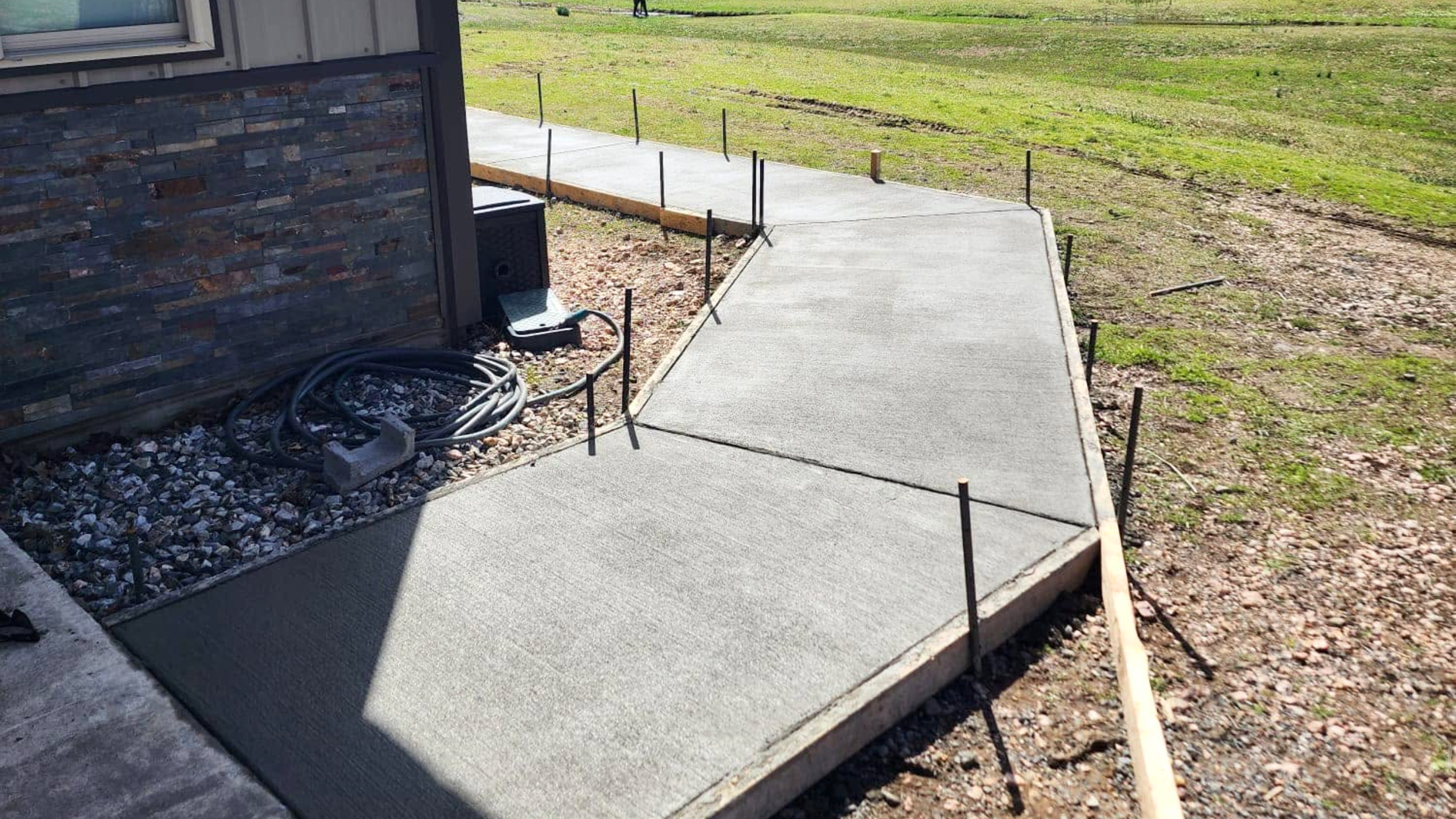
Square footage is the obvious driver, but shape matters just as much. A straight, simple path is quick to form and pour. Add curves, corners, or a winding garden route and the forming work multiplies, which raises labor time. Width plays in too, since a generous four-foot path uses noticeably more concrete than a narrow two-foot garden walk over the same distance. Smaller projects can also carry a higher per-foot cost, because minimum concrete delivery charges and crew setup get spread across fewer square feet.
Finish and Design Choices
This is where your budget has the most room to move. The core decisions that affect price include:
- Surface finish, from a basic broom texture up to stamped patterns that mimic stone or brick
- Color, added as an integral pigment in the mix or applied as a surface stain
- Borders and accents, which add forming work and detail labor
- Sealing, which protects decorative finishes and adds a modest per-foot cost
A plain path keeps costs down. A stamped, colored, and bordered entry walkway sits at the top of the range but delivers the biggest visual impact.
Site Preparation
What is under the concrete matters as much as the concrete itself. Prep costs vary based on:
- Excavation and grading, especially on a sloped or uneven yard
- The gravel or crushed aggregate base, which is essential for a stable, long-lasting surface
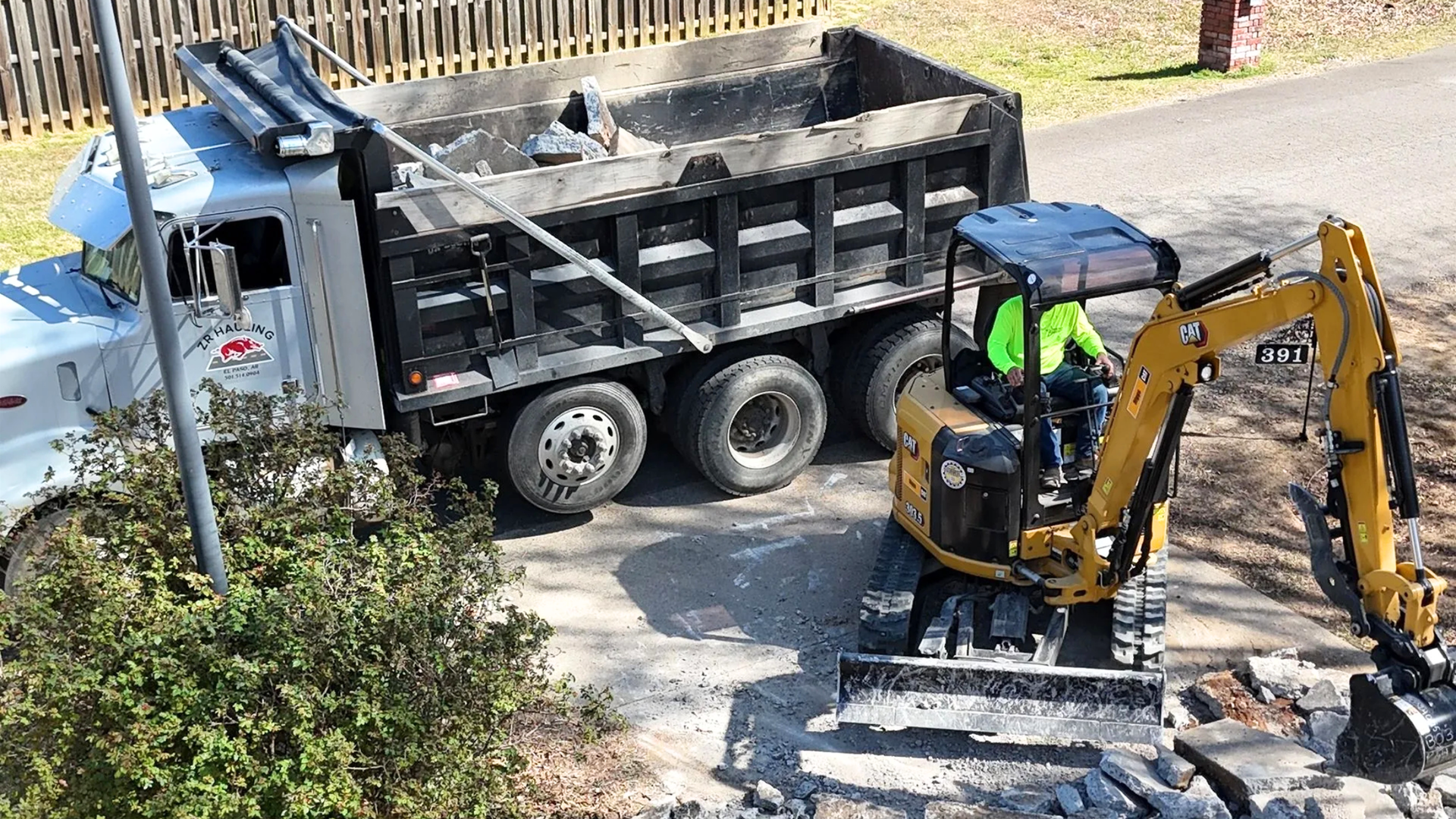
- Removal and disposal of an old cracked walkway, which typically adds a few dollars per square foot
- Soil conditions, which brings us to a local factor worth its own note
Local Soil and Drainage
Central Arkansas has pockets of expansive clay soil that swell when they soak up water during our heavy rainy seasons, then shrink as they dry. That movement is one of the most common reasons a walkway cracks or settles over time. Proper subgrade preparation and compaction, plus attention to how water drains off the path, are what keep a new walkway flat and intact for the long haul. It is not a glamorous line item, but skipping it is how you end up repouring in five years.
Design Options That Fit Your Home
A walkway is a functional surface, but it is also one of the first things a visitor sees. The good news is that concrete is far more versatile than its plain gray reputation suggests. A few directions to consider:
- A classic broom finish for a clean, low-maintenance look with reliable traction
- Stamped patterns that replicate flagstone, brick, cobblestone, or slate at a fraction of the material cost
- Integral color or staining to complement your home's exterior and landscaping
- Exposed aggregate for a natural, textured surface that hides wear well
- Decorative borders that frame the path and tie it into a patio or driveway
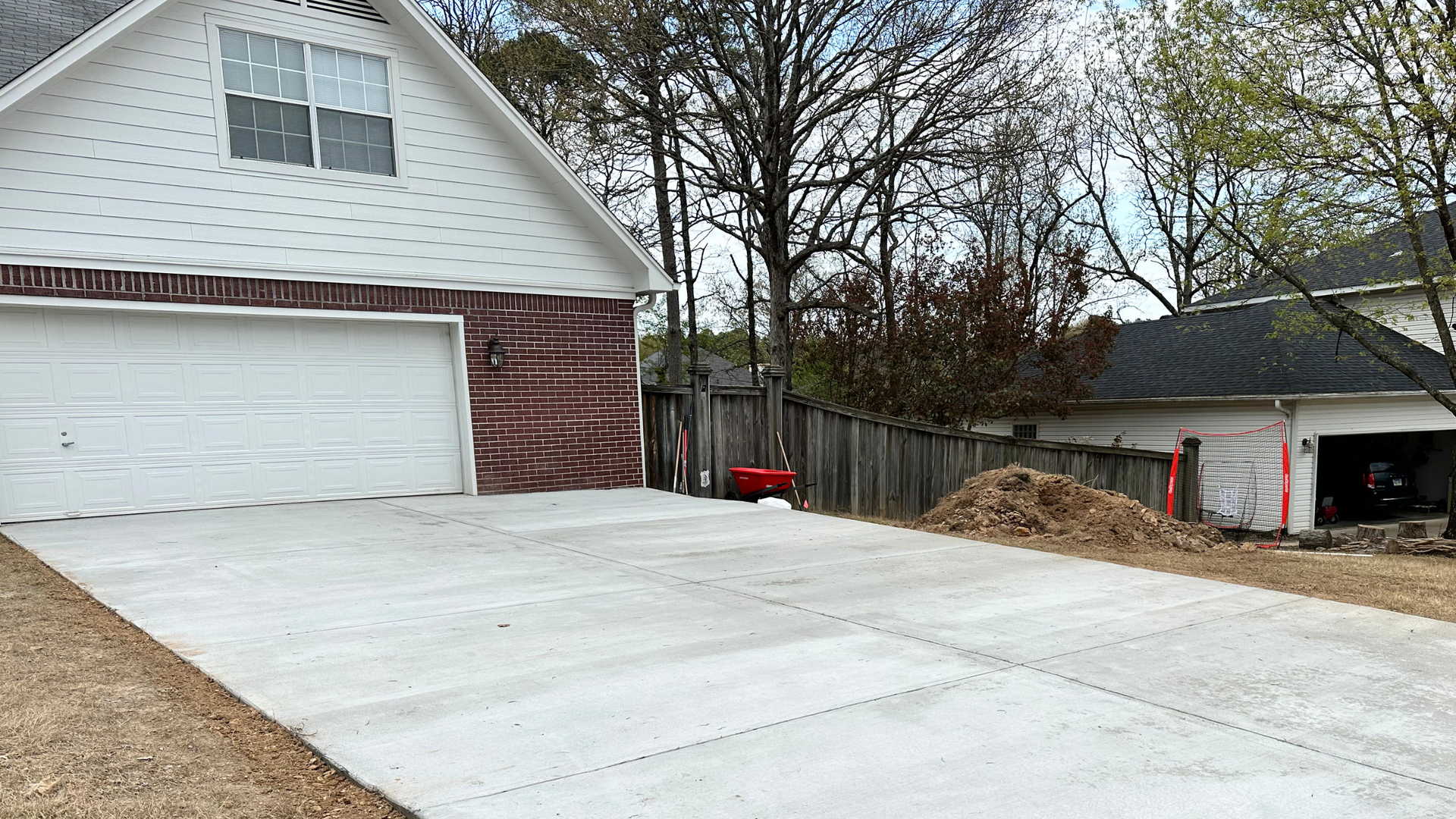
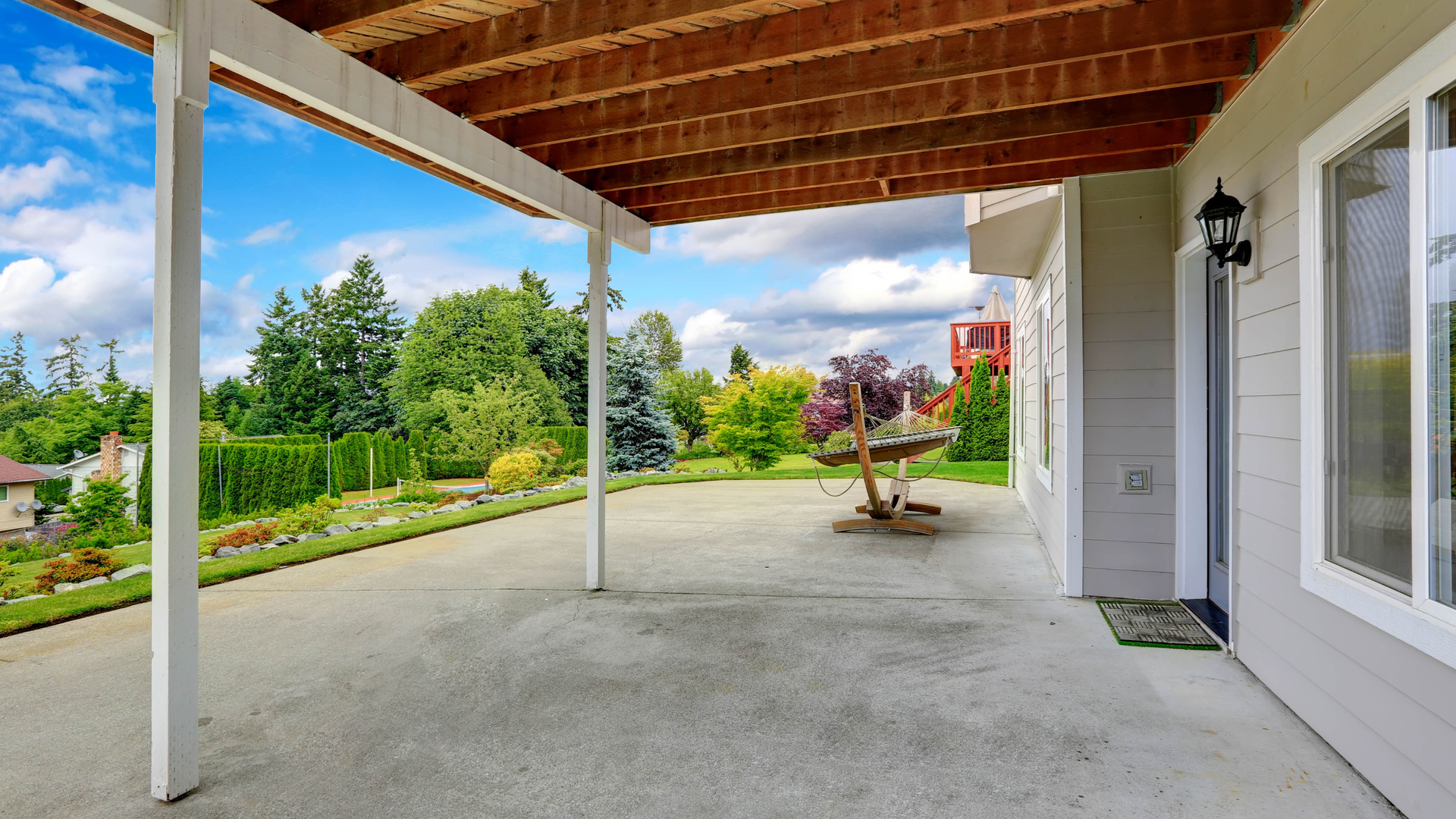
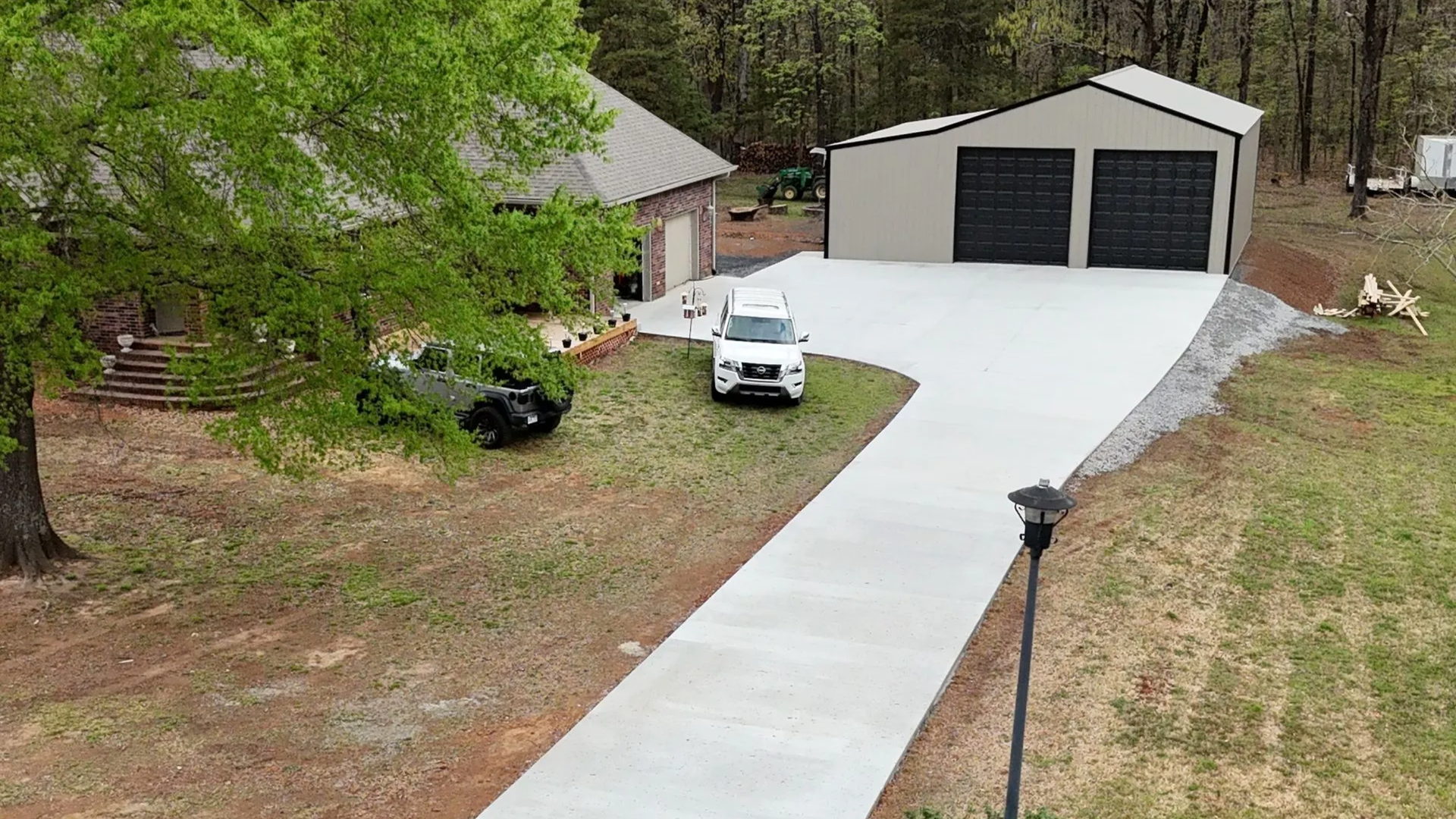
If your walkway connects to a larger outdoor project, coordinating the finishes pays off. Matching a new entry path to a concrete patio out back, or tying it into your concrete driveways at the curb, creates a cohesive look that lifts the whole property. It is worth thinking about the exterior as a whole rather than one slab at a time.
Do You Need a Permit for a Walkway in Little Rock?
Permitting depends on the scope and location of the work, and there are a couple of clear triggers to watch for.
For a walkway that sits entirely on your property and does not connect to the public street, a small path often falls below Little Rock's permit threshold, which kicks in for work valued over 5,000 dollars or any job requiring an inspection. A modest garden walkway usually stays under that line.
The picture changes when a walkway ties into the public sidewalk or right-of-way. Work that touches the public sidewalk generally requires review, because the city oversees anything in the right-of-way for safety and accessibility. If your project connects to a public walk at the property edge, plan on a permit and confirm the requirement before you pour.
A few practical points to keep in mind:
- Permit costs for this kind of work commonly run somewhere in the low hundreds of dollars, and a contractor can usually tell you upfront whether one is needed
- Inside Little Rock city limits, the City of Little Rock governs permits, setbacks, and drainage, not Pulaski County
- If your property is in North Little Rock, Sherwood, Cabot, or an unincorporated county area, the office you file with changes, though the idea is the same
- A licensed local contractor typically handles the permit as part of the job, which spares you the paperwork
Getting this right is not just red tape. A permitted, inspected walkway that connects to a public sidewalk protects you if you ever sell the home.
Hiring a Qualified Little Rock Area Concrete Contractor
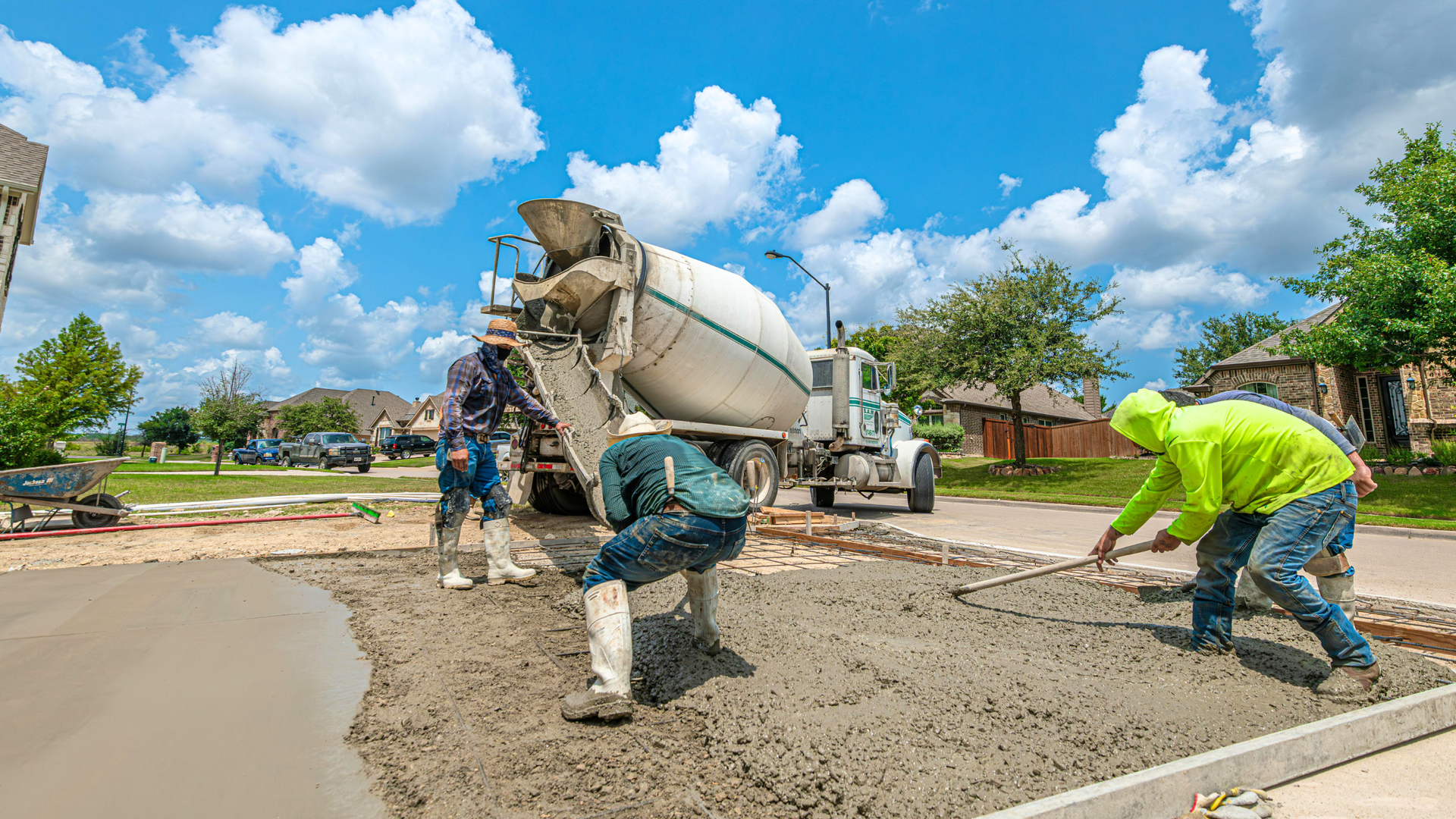
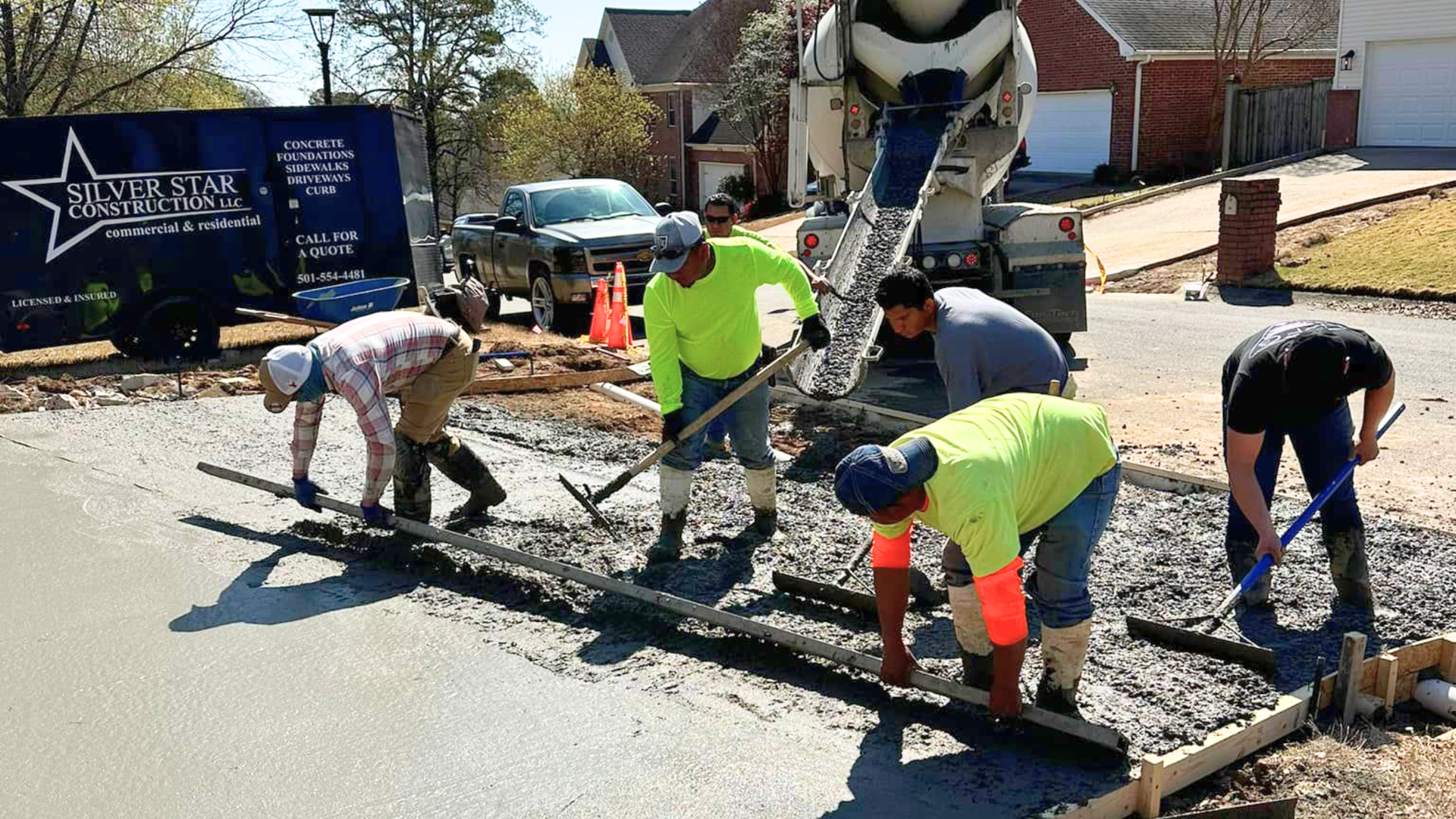
Estimating a walkway well means looking past the price per square foot to the things that determine whether the surface lasts. Excavation depth, base compaction, proper reinforcement, and drainage all sit beneath the finished surface where you cannot see them, and they are exactly where a rushed or unqualified crew cuts corners.
A top-rated Little Rock area concrete contractor plans for our local clay soil from the start, preparing the subgrade so your new walkway does not crack or heave when the ground shifts during a wet season. When you are comparing bids, it helps to ask each contractor a few direct questions:
- How deep will you excavate, and what base material will you use?
- How will you handle drainage and grading around the path?
- Is the quote for a plain or decorative finish, and what does sealing cost?
- Does the project need a permit, and will you handle it?
- Are you licensed and insured for work in this area?
The cheapest bid is not always the best value. A slightly higher quote that includes proper prep and a real warranty usually costs less over the life of the walkway than a bargain pour that fails early. For sidewalk and walkway work specifically, our sidewalk services page covers how we approach these projects across Central Arkansas.
Frequently Asked Questions
How much does a concrete walkway cost in the Little Rock area?
A standard broom-finish walkway typically runs 7 to 17 dollars per square foot installed, with most residential paths landing around 8 to 12 dollars. A decorative stamped finish runs roughly 10 to 22 dollars per square foot. A typical 200 square foot path usually falls between about 1,600 and 3,000 dollars for a plain finish, with stamped versions costing more.
What is the difference in cost between plain and stamped concrete?
Stamped concrete generally costs a few dollars more per square foot than a plain broom finish, often 2 to 5 dollars more, and sometimes more for multi-color or highly detailed patterns. The premium buys a surface that mimics stone or brick for far less than the real material would cost.
Why do concrete walkways crack in Central Arkansas?
The most common culprit is our expansive clay soil, which swells and shrinks as it absorbs and loses moisture through wet and dry seasons. Without proper subgrade preparation, compaction, and drainage, that ground movement stresses the concrete and leads to cracking or settling. Good prep work is the best defense.
Do I need a permit to replace an existing walkway?
If you are replacing a path that stays on your property and does not connect to the public sidewalk, you often do not need a permit, as long as the work stays under Little Rock's threshold and requires no inspection. Work that ties into the public sidewalk or right-of-way generally does require review. Your contractor can confirm.
How long does a concrete walkway last?
A properly installed and maintained concrete walkway can last for decades. The keys are quality subgrade preparation, correct thickness, good drainage, and periodic sealing for decorative finishes. Resealing a stamped or colored path every few years keeps its color and protection intact, while a plain broom finish needs little more than the occasional cleaning. In our climate, the prep work beneath the surface is what most determines how long the walkway holds up.
Plan Your Walkway Project With Silver Star Concrete
A new concrete walkway or sidewalk is one of the most cost-effective ways to improve how your property looks and functions. The price comes down to size, finish, site prep, and whether the work connects to the public sidewalk, and the smartest investment you can make is in the preparation beneath the surface that keeps our local clay soil from cracking your new path.
At Silver Star Concrete, we have spent more than 20 years installing walkways, sidewalks, patios, and driveways across Little Rock, Conway, Sherwood, Cabot, and North Little Rock. We prepare every project for our local soil and weather, handle permitting when it is needed, and build surfaces meant to last. If you are ready to price out a walkway or just want honest guidance on the right finish for your home, contact our team for a free estimate.