The Best Time of Year to Pour Concrete in Central Arkansas
If you are planning a new driveway, patio, slab, or foundation, one of the smartest questions you can ask before signing a contract is simple: when should the concrete actually be poured? In Central Arkansas, timing is not a minor detail. Our humid subtropical climate swings from triple-digit summer afternoons to sudden winter cold fronts, and both extremes affect how fresh concrete sets, cures, and holds up over the years. Pour at the right time under the right conditions, and you get a strong, crack-resistant surface that lasts for decades. Pour on a hot, humid July afternoon without the right precautions, and the mix can set too quickly, lose long-term strength, and develop surface cracking before it ever reaches full hardness.
This guide breaks down the best time of year to pour concrete in Central Arkansas, why local weather matters so much, and how the region's specific temperature, humidity, and rainfall patterns should shape your project schedule. Whether you are in
Little Rock,
Conway,
Sherwood,
Cabot, or
North Little Rock, understanding the seasonal rhythm here helps you plan a project that turns out right the first time.
Why Timing Matters for Central Arkansas Concrete Projects
Concrete does not simply dry out. It cures through a chemical reaction called hydration, in which water and cement bind together to form the crystalline structure that gives the finished slab its strength. That reaction is sensitive to temperature and moisture. When conditions are too hot, water evaporates from the surface faster than the concrete can use it, which weakens the final product and invites shrinkage cracks. When conditions are too cold, the reaction slows down dramatically, and if the water inside freezes before the concrete sets, it expands and cracks the slab from within.
The generally accepted sweet spot for placing concrete is when temperatures hold between roughly 50 and 60 degrees Fahrenheit, staying above 40 and below 90 for the critical curing window. That range is easy to overlook when you are focused on project cost and design, but it has a direct impact on how long your investment lasts. A driveway or foundation poured under favorable conditions simply has a better chance of reaching its full strength and avoiding early repairs.
Understanding the Central Arkansas Climate
Central Arkansas sits in a humid subtropical climate zone, which shapes everything about concrete scheduling here. Summers are hot and muggy, winters are short but capable of sharp cold snaps, and spring brings heavy, frequent rainfall. Little Rock alone averages close to 50 inches of precipitation a year, and the area is subject to alternating pushes of warm Gulf moisture and cold Canadian air that can send temperatures from the 70s into the 20s within a single stretch of days.
For a concrete pour, three local factors matter most: temperature, humidity, and rain. Our summer afternoons routinely climb into the low 90s, with July and August highs averaging around 91 to 92 degrees and roughly eight days a year reaching 100 or more. Summer humidity typically hovers near 71 percent, which sounds helpful for curing but comes paired with the heat and sun that dry a surface too fast. Spring, meanwhile, is our wettest stretch, with April and May bringing the heaviest rainfall and the greatest risk of a pour being disrupted before it can set. Understanding this pattern is what separates a well-timed project from a rushed one.
The Best Seasons to Pour Concrete in Central Arkansas
Fall Is the Standout Window
For most residential projects in Central Arkansas, fall is the best overall time to pour concrete. From late September through November, daytime temperatures settle into a moderate, comfortable range, humidity eases off its summer peak, and rainfall is generally lighter and less disruptive than in spring. These conditions give concrete the steady, unhurried curing window it needs to develop full strength. The cooler air reduces the risk of rapid surface evaporation, while temperatures usually stay well above freezing, so there is little concern about the mix setting too slowly. If your schedule is flexible, planning a driveway, patio, or slab for fall is often the single best decision you can make.
Spring Can Work, but Watch the Rain
Spring temperatures, especially from late April into June, are close to ideal on paper. The catch in Central Arkansas is water. This is our wettest season, with frequent thunderstorms and the year's heaviest rainfall concentrated in April and May. Concrete needs roughly two to three days of dry conditions to set properly, and a poorly timed downpour can dilute the surface, weaken the slab, and undo careful preparation. Spring pours are absolutely workable here, but they demand close attention to the forecast and a contractor who knows how to schedule around our storm patterns and protect a fresh pour if weather moves in.
Summer Requires Real Precautions
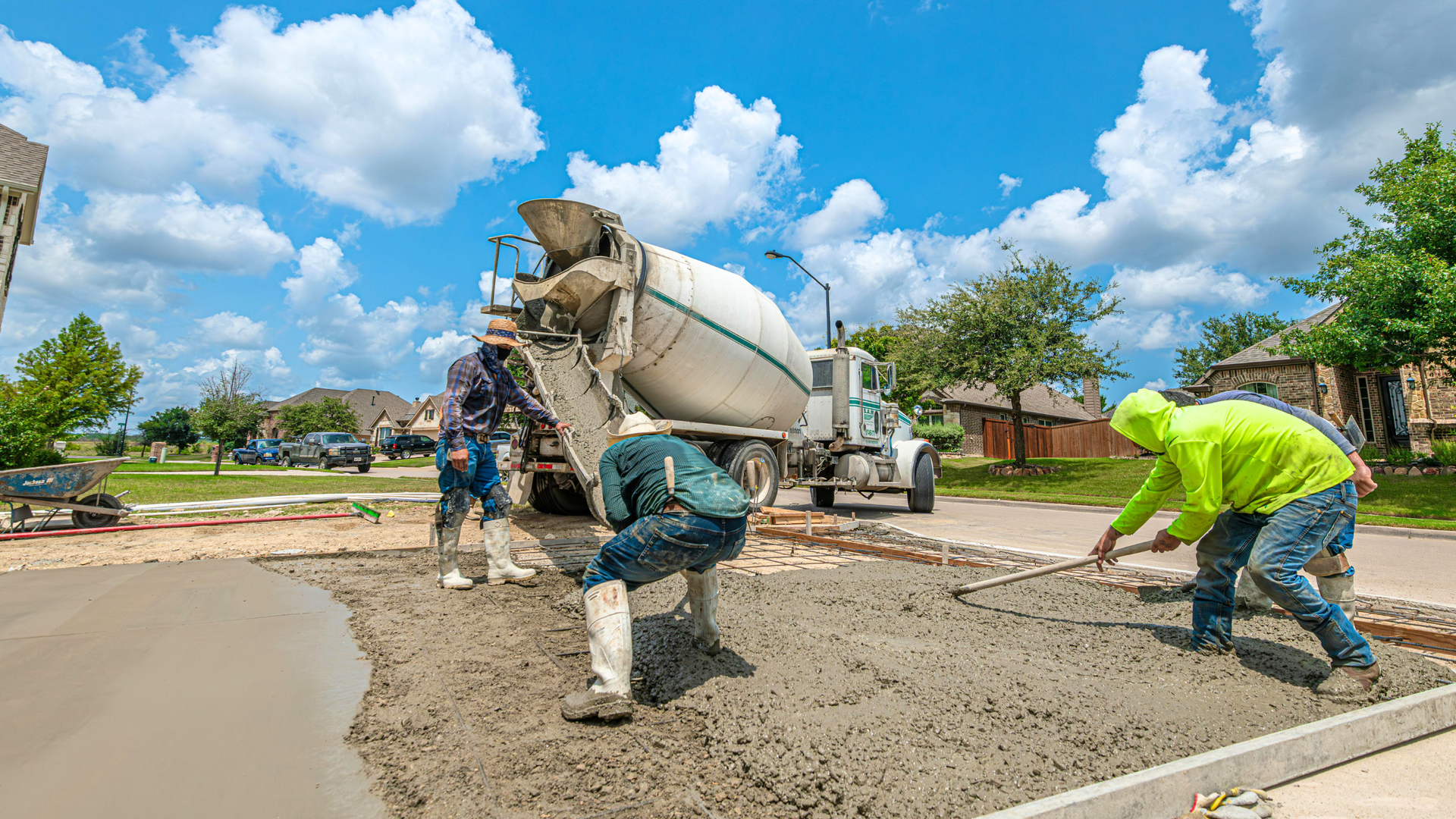
Summer is the busiest season for outdoor projects, and plenty of concrete gets poured successfully in Central Arkansas during these months. But this is the season that punishes shortcuts. On a humid, triple-digit July afternoon, concrete can set too fast, lose long-term strength, and crack at the surface if it is placed without the right approach. Experienced crews handle summer heat by scheduling pours for early morning or late in the day to avoid peak sun, using techniques and admixtures that slow the set, and keeping the surface moist during curing. Poured with care, a summer slab holds up fine. Poured carelessly in the worst heat of the day, it often does not.
Winter Is Possible With Cold-Weather Methods
Central Arkansas winters are short and relatively mild compared with the northern states, but cold fronts can still drop temperatures below freezing and bring sleet or freezing rain. When temperatures fall under 40 degrees, the hydration reaction slows sharply, and fresh concrete must be protected from freezing before it fully sets. Following American Concrete Institute cold-weather guidance, professional crews use methods such as set accelerators, insulated blankets, and careful scheduling to keep a pour on track through a cold stretch. Winter is not the ideal season, but with the right precautions, quality work is achievable even in the cooler months.
Central Arkansas Concrete Pouring Season at a Glance
The table below summarizes how each season affects concrete work in our region and what to keep in mind before scheduling.
| Season | Typical Conditions | Suitability for Pouring | Key Considerations |
|---|---|---|---|
| Fall (Sep-Nov) | Mild temps, lower humidity, lighter rain | Excellent, best overall window for most projects | Steady curing window, low rain disruption, book early as crews stay busy |
| Spring (Apr-Jun) | Warming temps, heaviest rainfall of the year | Good, but weather dependent | Watch the forecast closely, plan around thunderstorms, allow dry curing days |
| Summer (Jun-Aug) | Hot, humid, occasional 100-degree days | Workable with precautions | Pour early or late in the day, use set-slowing methods, keep surface moist while curing |
| Winter (Dec-Feb) | Short but sharp cold fronts, occasional freeze | Possible with cold-weather methods | Protect from freezing, use accelerators and blankets, follow ACI cold-weather practices |
How Central Arkansas Temperatures Affect Curing and Strength
The relationship between temperature and concrete strength is worth understanding because it explains why timing carries such long-term consequences. Below is a simple breakdown of how different temperature ranges affect a pour in our climate.
| Temperature Range | Effect on Concrete | What It Means for Your Project |
|---|---|---|
| Below 40 F | Hydration slows sharply, freeze risk before setting | Needs cold-weather protection, longer curing, professional handling |
| 40 F to 60 F | Ideal curing conditions | Best strength development, lowest crack risk, the target window |
| 60 F to 90 F | Good, but monitor evaporation | Solid results with normal precautions and proper curing |
| Above 90 F | Sets too fast, surface evaporation outpaces curing | High crack and strength-loss risk, needs hot-weather methods and timing |
The takeaway is that the 40 to 60 degree range gives you the most forgiving conditions, which is exactly why fall works so well here and why summer and winter pours call for extra care.
Planning Your Central Arkansas Concrete Project Around the Seasons
Choosing the right season is only part of a smart plan. A few practical steps help any Central Arkansas project turn out well regardless of the calendar.
Start by booking early, especially for fall. Because fall offers the best conditions, quality crews fill their schedules quickly, so reaching out well ahead of time protects your preferred window. Next, watch the multi-day forecast rather than a single day. Concrete needs a dry, stable stretch to cure, so a pour should be scheduled when there is little chance of rain or a hard freeze in the following two to three days. It also helps to match the project type to the season. A large foundation or slab benefits most from the steady conditions of fall, while smaller projects offer more flexibility to work around weather. Finally, lean on local expertise. A contractor who works in this climate every day knows how to read our weather patterns, prepare the site properly, and apply the right hot or cold weather methods when conditions are not perfect.
For homeowners weighing whether an existing surface can wait or needs replacing before the ideal season arrives, our guide on concrete driveway repair versus replacement can help you decide how urgent the work really is. And if you are still comparing options for a new installation, the detailed Central Arkansas concrete driveway planning guide walks through cost, thickness, and durability specific to our area.
Why a Local Central Arkansas Contractor Beats DIY Guesswork
It can be tempting to treat a concrete pour as a weekend project, but timing is one of the areas where professional experience pays off most clearly. A homeowner watching a single day's forecast might miss an incoming cold front or an afternoon storm that ruins a fresh slab. A professional crew plans around the full weather picture, prepares the base correctly, and has the equipment and admixtures on hand to protect a pour when conditions shift. That preparation is the difference between a surface that reaches full strength and one that starts failing within a few years.
The same principle applies across every kind of project. Whether you are investing in concrete driveways, a backyard concrete patio, a durable concrete slab, or a structural foundation, the timing and curing process directly shapes how long that work lasts. Getting it right the first time is far less expensive than repairing or replacing a slab that was poured under the wrong conditions.
Frequently Asked Questions
What is the best month to pour concrete in Central Arkansas?
For most residential projects, the fall months of September through November offer the best conditions. Temperatures are moderate, humidity has dropped from its summer peak, and rainfall is generally lighter, which gives concrete a steady window to cure and reach full strength.
Can you pour concrete in the summer in Arkansas?
Yes, but it requires precautions. On hot, humid days, concrete can set too quickly and lose strength or crack at the surface. Experienced crews pour early in the morning or later in the day to avoid peak heat, use methods that slow the set, and keep the surface moist while it cures.
Is it safe to pour concrete in the winter here?
It is possible with cold-weather methods. When temperatures drop below 40 degrees, concrete must be protected from freezing before it fully sets. Professionals follow American Concrete Institute cold-weather practices, using accelerators, insulated blankets, and careful scheduling to keep the pour on track.
How does rain affect a concrete pour?
Concrete needs roughly two to three days of dry conditions to cure properly. Rain during or shortly after a pour can dilute the surface and weaken the slab. Because spring is the wettest season in Central Arkansas, pours during those months need close attention to the forecast.
What temperature is too hot to pour concrete?
Once ambient temperatures climb above 90 degrees, the risk of rapid surface evaporation, shrinkage cracking, and reduced strength rises significantly. Pours in that range should be scheduled for cooler parts of the day and handled with hot-weather techniques.
Plan Your Concrete Project With Silver Star Concrete
The best time of year to pour concrete in Central Arkansas comes down to matching your project to our climate. Fall offers the most forgiving conditions, spring works with careful attention to rain, and summer and winter are both achievable when the work is handled by a crew that understands hot and cold weather methods. In every case, the goal is the same: a strong, lasting surface poured under the right conditions the first time.
At Silver Star Concrete, we have spent more than 20 years pouring driveways, patios, slabs, and foundations across Little Rock, Conway, Sherwood, Cabot, and North Little Rock. We know how our seasons behave and how to plan around them so your project turns out right. If you are ready to schedule a project or simply want honest advice on the best timing for your property, contact our team for a free estimate and let us help you get it done the right way.